
This can’t really be listed as a walk to be honest – its more a moderate stumble across a moon-like landscape designed to break your ankles – but so much fun!
Rock pooling can be done at any time or the year, although you’d be hopeful in thinking that May to September would be slightly more pleasant. The best time of day to go is at the peak of low tide so you get lots of time to peer into the pools without fear of drowning. We aimed to get to Birling Gap 1/2 an hour before this so it gave us a chance to get down to the rock pools right by the coasts edge where most of the fresh pickings are. Unless you are particularly in tune with the lunar calendar (hoooowwwwl!) I found this website helpful in taking away the guess work here: www.tidetimes.co.uk
The other thing to mention is your chosen attire. Yes its British Summertime, yes its a trip to the seaside and yes everyone else is doing it, but NO you shouldn’t strut around in a thong that’s too small for you and flip flops. Rock pooling I can imagine is quite similar to walking on a stretch of broken glass doused in slidey wet fairy liquid. Shredded big toes kind of put a dampner on a big day out. You’ll also find yourself on your knees in various twister like contortions looking under rocks with your arse in the air. No-one wants to see your starfish matey – NOONE!
Other than that you don’t really need any equipment as such. A net is considered a bad idea nowadays, despite what you might have taken with you as a kid – you stand a high chance or damaging the more delicate creatures. A see-through plastic tub though is a great idea – that way you can look at your captured critters from underneath (perv!). Remember not to keep them prisoner too long though, and if you have more than one beastie in the tub, consider what kind of inmates they might make each other – it can mean certain death for one of them!
Birling Gap is part of the Seven Sisters and is owned by the National Trust. You climb down to the beach via a big wooden staircase – so you ‘ll want to travel light! The erosion of the chalk cliffs seems to be proceeding at quite a pace nowadays and the row of cottages that you can just see in the photo below (to the right of the visitor centre) are having to be demolished one by one as they become in danger of falling off the edge!
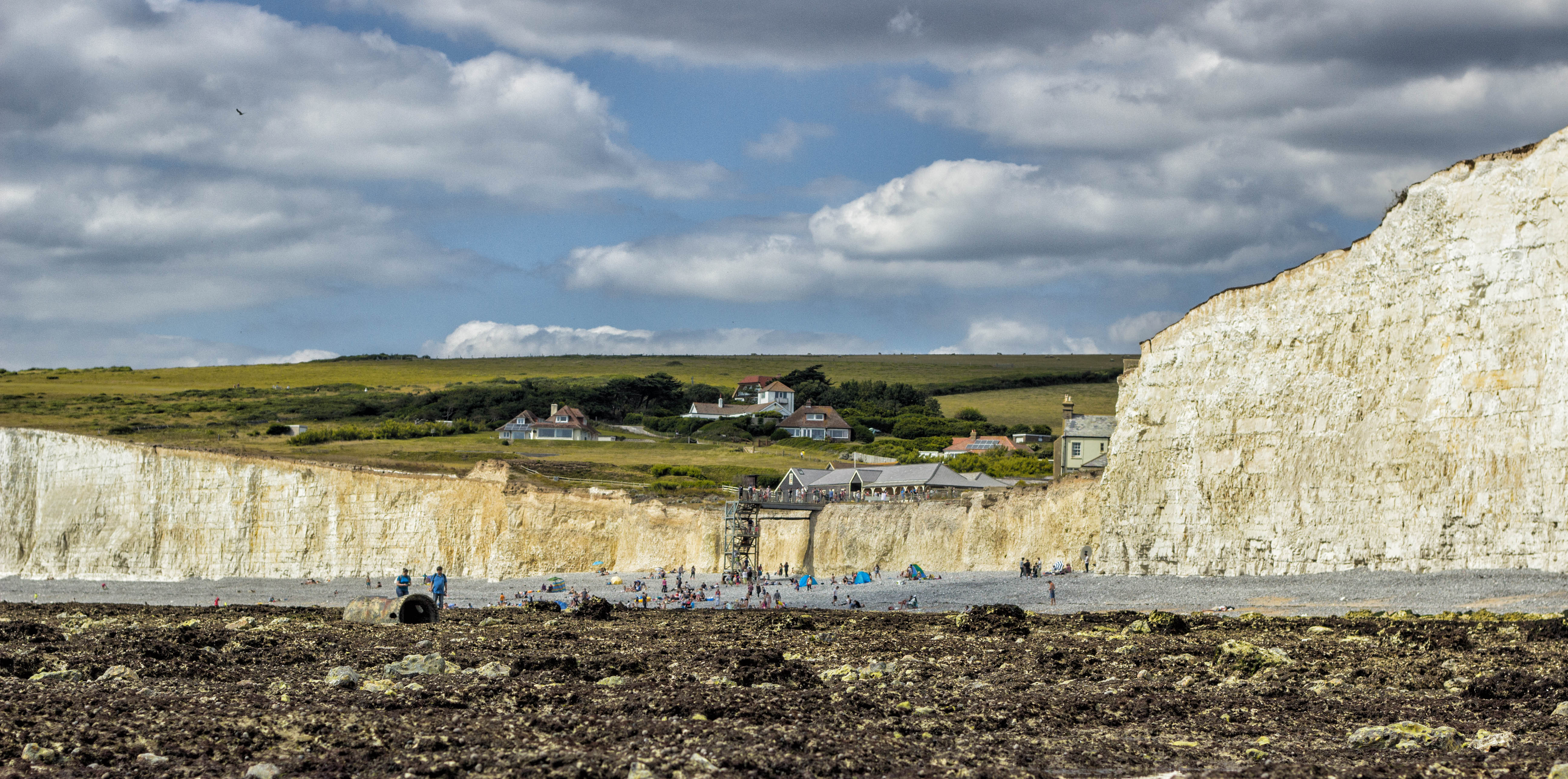
You can take a stroll along the cliff edge towards Beachy Head, take in the views and swing your legs over the edge (not advised). Or if you are like me and have a healthy deep-rooted, all encompassing fear of heights, and perhaps paranoid that your dog might wing over the edge chasing seagulls then I heartily suggest rockpooling is for you!
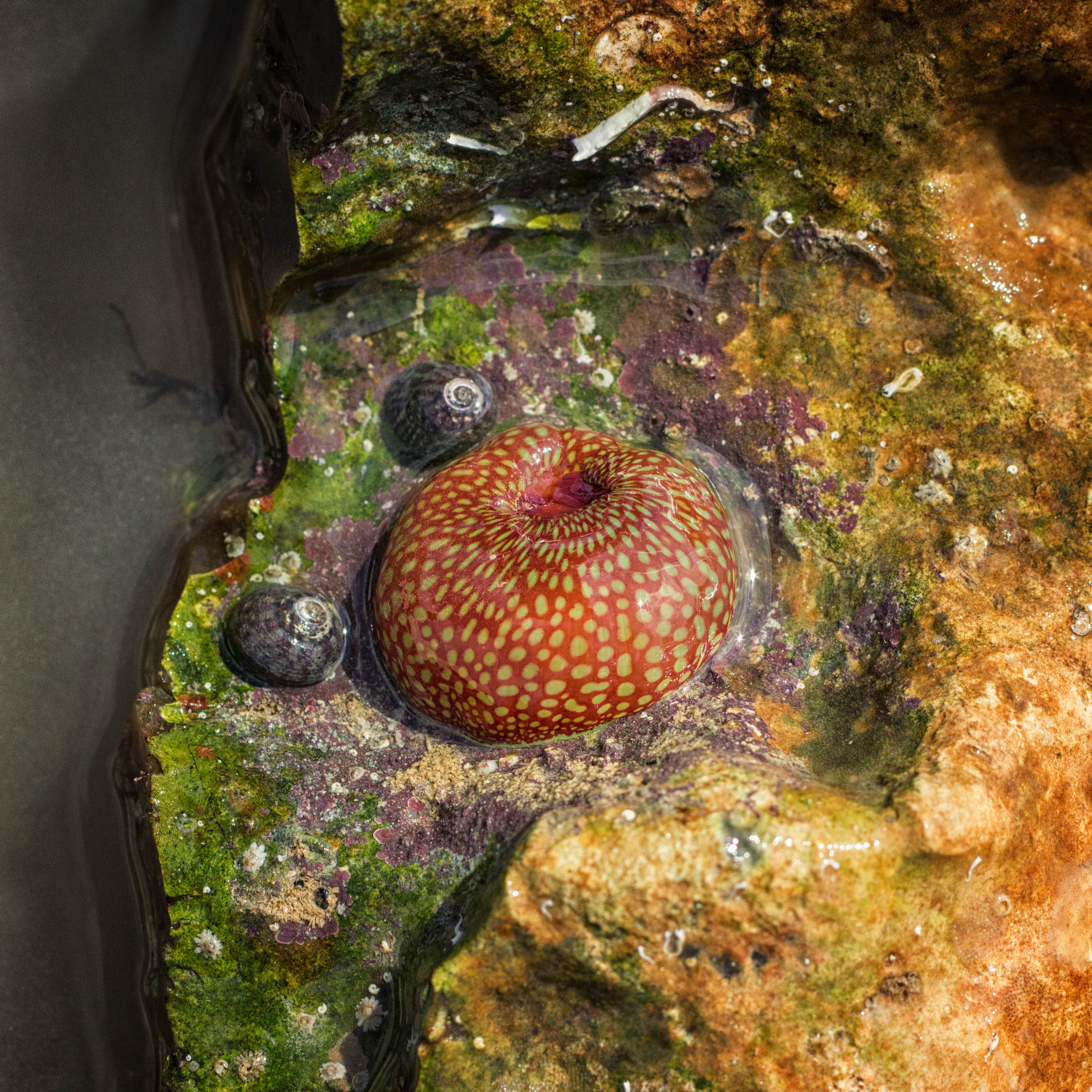 Anenome
Anenomes’ stand out to me not just for their pretty colours – their mouth is also their BOTTOM! I’ll just leave that with you for a second…
The anemone we found is called a Strawberry Anenome, rather predictably because it looks like a…. strawberry. An anemone will actually sting its prey with its venomy tentacles, after which is swallowed into its mouth / bottom. There are nearly 1000 different species of anemone, and they range in size from the one on the right here to a whopping 1.8 meters!
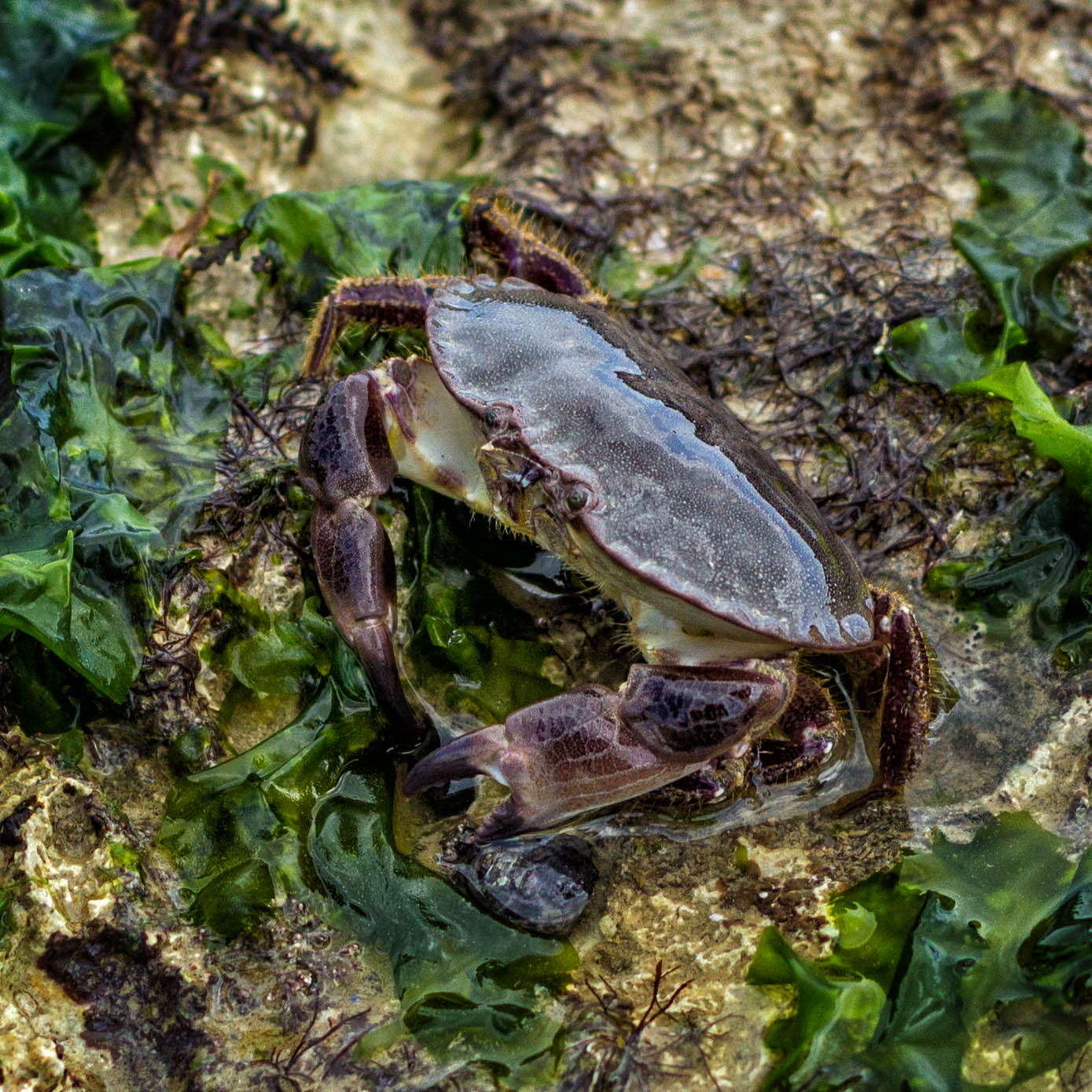 Crabs
CrabsWas quite excited when we found this fella – was nearly as good as finding treasure! Unfortunately he is apparently a mitten crab. Mitten crabs are not especially popular with Conservation Peoples – they are pretty damn near to the top of UK’s most unwanted Invasive species! Normally crabs stay fairly close to water but Mitten Crabs will think nothing of walking a mile from the shore in search of new habitats. In 1995 Greenwich residence reported seeing Chinese mitten crabs emerging out of the River Thames and going for a wander up the High Street! They’re taking over the world!
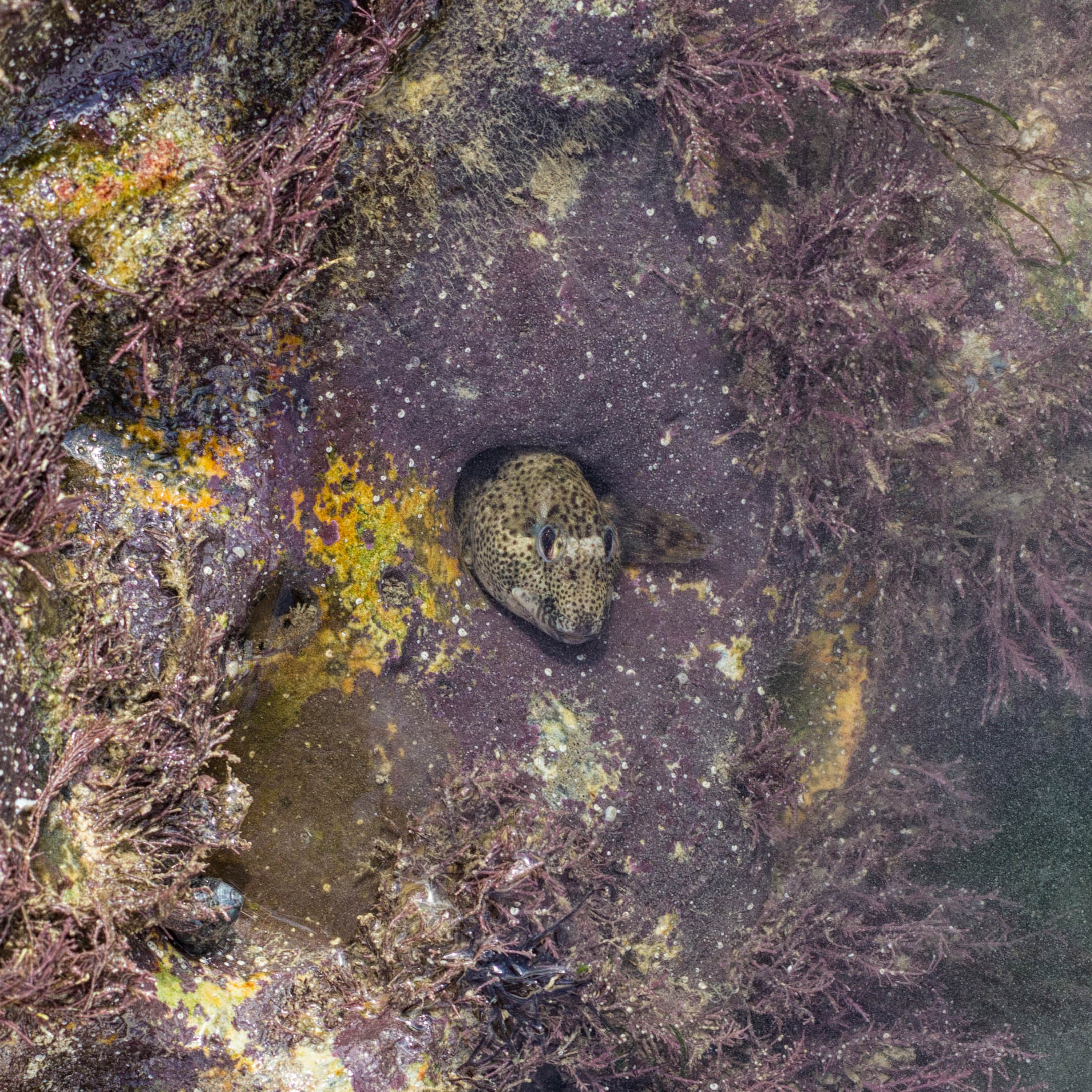 Blenny Fish
Meet the Common Blenny. He’s a bit of a regular round these parts and loves to hide in rocks. A bit of a wide boy – he masquerades under several different names including the Shanny or The Sea Frog – you don’t want to piss him off as he will bite!
Blenny’s can actually breath outside of water for many hours, which comes in useful when the tide goes out and they get stuck in low water! They can live for up to ten years which isn’t bad going for a little fishy.
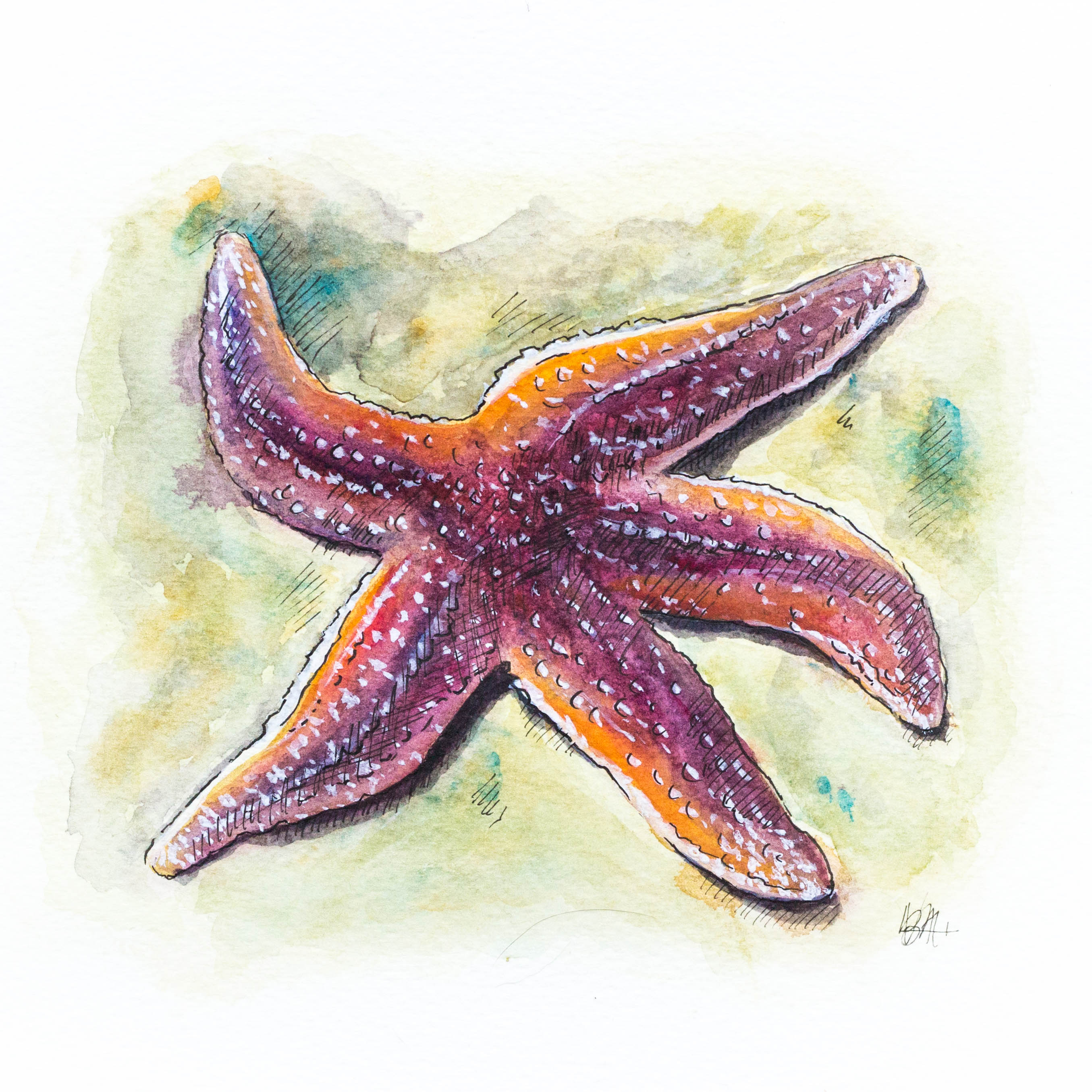 Starfish
An old seaside favourite! Commonly seen dehydrdated, spray painted baby blue and perched on a bathroom shelf gathering dust. Would like to say “and here on the right is a picture of the real thing”, but I didn’t have any luck finding any on the day, so I painted you a picture instead. You might have better luck than I!
Starfish can miraculously regenerate arms, if one say gets trapped or perhaps if they fancy a newer better one. It can take up to a year though, so its not a decision they take lightly! They also don’t have blood, having a water vascular system instead where they basically become a little mini sea water pump. Breakfast, lunch and dinner for a starfish is a strange affair – they push their stomach outside themselves, digest their prey and then suck their little belly back in again. I’ve been known to do something similar when I have had too much scotch…
 Limpets
OK so I would like to admit to playing a game with limpets. If you sneak up on them, you can shift them about 3 mm from their rock before they clamp themselves back to the rock like a super stubborn fridge magnet. Oh yes hard as nails me, sneaking up on limpets…
At high tide, they loosen their vice-like grip and venture over the surface of the rocks to feed on the algae, using tiny teeth. They will travel up 1m from where they began at the start of the day, and return to the exact same spot when the tide goes out.